
Preview
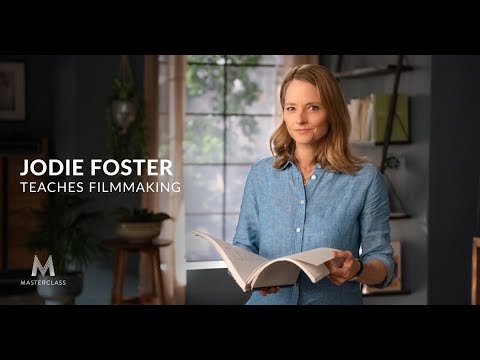
The one thing I wished that I had learned when I first started as a director was that all I really needed was confidence and a pen and a paper. I thought that somehow I had to know every lens size, that I had to be aware of every type of film stock. The truth is, is that everything that you have to know is inside of you. Every decision making process is instinctual. And as long as you have a pen and a paper to write it down, you’re in good shape.
I was a child actor. I started when I was three years old. I understood that the director had a full vision, that the director could make decisions that would influence how the film was and how the film ended up on screen. I understood that the director was in charge of dreaming the dream.
I think the first time I got the bug to direct, I was about six or seven years old. I was on a television show called “The Courtship of Eddy’s Father.” And one day I came to work and the man who was playing the father, Bill Bixby, was the director that day.
I was stunned. I couldn’t believe that they let actors become directors. And I watched him that day, directing the crew, setting up the shots, talking to the actors. And I knew immediately that that’s what I wanted to do when I grew up.
We’re going talk about a bunch of things in this course. We’re going to talk about working with actors. We’re going to talk about working with technicians, whether it’s your script supervisor, your first AD, your DP, your production designer; how to work with a screenwriter; and how to recognize shifts and changes that you’ll need to be making in your script as time goes on, how to develop it.
And then there’s all the technical things, how to make a shot list, how to choose coverage, how to work with an editor, and how to edit down the sequences that you’ve come up with. I’m going to give you the actor/director’s perspective, somebody who inhabits both sides of the fence. So acting and directing simultaneously and what you may need to know about how to get your own films off the ground.
One of the reasons why I wanted to teach this class was I wanted to bring the excitement of creating a signature and expressing yourself in a work of art. For me, that’s been the whole point of my life. It’s been the greatest joy of my life, is to take everything that I am and everything that I think, and I feel, and I question, to put it on an arrow and to shoot it outwards, and to hope that it connects with other people.
One of the things that you achieve by doing this is a real understanding of who you are, of your identity, where you come from, your signature, what you love, and why. You’re opening yourself up to people. You’re connecting you to them. That means you to the crew, but also you to the wider audience. Really, that’s the joy of making movies.
I’m Jodie Foster. And this is my MasterClass.
Storytelling in action
Go behind the scenes with two-time Oscar-winner Jodie Foster, star of Silence of the Lambs and director of Little Man Tate. In her first online film class, she’ll teach you how to bring your vision to life. Jodie discusses her experience on both sides of the camera to guide you through every step of the filmmaking process, from storyboarding to casting and camera coverage. Everyone has a story. Learn how to tell yours.
LESSON PLAN
01. Introduction
Meet your new instructor: Oscar-winning actor and director Jodie Foster. Jodie talks about her perspective from both sides of the camera, what you’ll learn in her class, and why filmmaking means so much to her.
02. Finding Your Personal Story
To help you find the story you want to tell, Jodie gets personal. She speaks candidly about failure, identity, and self-knowledge so you can learn her process for authentic filmmaking.
03. Exploring the Big Idea in Film
Jodie breaks down the concept of the “big idea” in film. You’ll discover how you can use it as a tool to hone your storytelling skills.
04. Jodie’s Short Film: Building Your Story Into a Screenplay, Part 1
Inspiration can come from anywhere. Jodie translates a real-life experience into a dramatic scene with Scott Frank, the screenwriter of her first film, Little Man Tate.
05. Creating the Vision for Your Film
As a director, your job is to communicate with your collaborators to create the vision for your film. Jodie discusses the tools she uses so you can bring your ideas to life.
06. Deconstructing Visual Choices: The Beaver
Jodie breaks down a storyboard sequence from her movie The Beaver to explain how she chose shots that help convey the emotional message of the scene.
07. Jodie’s Short Film: Building Your Story into a Screenplay, Part 2
Jodie reunites with Scott to continue workshopping the draft screenplay inspired by her real-life experience. Learn how Jodie collaborates with writers to help build character, tension, and realism into a scene.
08. Jodie’s Short Film: The Screenwriter-Director Collaboration
Jodie and Scott go deeper into how to make the relationship between a director and a screenwriter more fruitful and effective.
09. Jodie’s Short Film: Constructing a Scene
Using the short scene that she wrote with Scott, Jodie demonstrates how you can begin to visualize your story by mapping out a shot list.
10. Prepping and Scheduling
Prepping and scheduling is critical to your film’s success. Learn the tools and methods that Jodie uses in her films that you can apply to your own.
11. Casting
Jodie argues that casting is one of the most important decisions you can make as a filmmaker. Learn how she approaches the casting process and what you can look for in an actor when casting your own films.
12. The Acting Process
Drawing from her own acting process, Jodie teaches you how to inspire a powerful and honest performance from an actor.
13. Directing Actors
Jodie teaches you how to work with an actor on set to create a compelling scene.
14. Shooting Your Film
Directing a film is a series of choices and compromises. Learn about the tools Jodie uses to track her film while shooting, including set notes and reaction shots.
15. Selecting a Performance Case Study: Jack O’Connell in Money Monster
Using Jack O’Connell’s performance in Money Monster, Jodie shows you what she considers when selecting a performance from multiple takes. Learn how to review dailies to make choices for your own film.
16. Editing
Learn how Jodie approaches the editing process as she breaks down a scene put together from raw footage for Money Monster.
17. Music
Jodie uses music as a tool bind the seams of a movie together. With examples from her own films, Jodie teaches you how music selection can enhance your film.
18. Conclusion
Jodie concludes her class with a note on the future of filmmaking, female filmmakers, and her final words of wisdom.
Sales Page:_https://www.masterclass.com/classes/jodie-foster-teaches-filmmaking



Reviews
There are no reviews yet.